
The Challenge
Wandsworth is one of the most active boroughs in the country. However, there were two challenges:
First, we know that some communities still face persistent health inequalities: lower physical activity, higher isolation, and real barriers to using traditional leisure services. The Wandle Recreation Centre had untapped potential as a community asset but wasn’t reaching or reflecting the residents around it.
Second, we recognised a coordination problem: Public Health, Culture and Leisure, universities and community partners were working in parallel rather than together.
Learning from the precedent set by the likes of Greater Manchester Moves, we set out to build an Active Wellbeing System to address these challenges. We hoped to shift from traditional leisure provision towards a broader, place-based model of health and wellbeing.
What we mean by an Active Wellbeing System
For us, an Active Wellbeing Hub is a vibrant, inclusive and connected space where every resident can thrive- physically, mentally and socially. It’s a shift away from traditional leisure provision towards a broader wellbeing model: somewhere that offers a lifelong journey of wellness, builds on people’s strengths, integrates support across partners, tackles loneliness and vulnerability, and puts community at its heart.
In short, it reimagines how spaces, partnerships and engagement can create more inclusive, preventative and community-led approaches to health and wellbeing.
What we did
Rather than design a finished programme and launch it, we ran a test-and-learn approach to find out what a wellbeing hub could look like for residents.
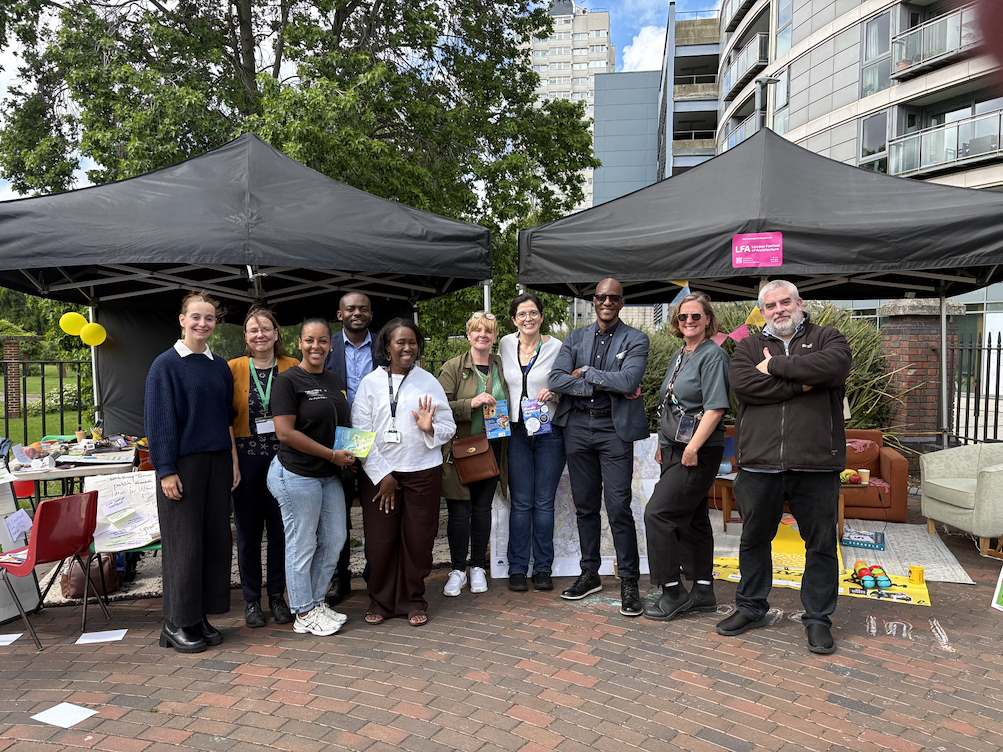
Over three drop-in days at the centre during the London Festival of Architecture (10–12 June 2026), we brought 12 organisations together (external providers, VCSE partners and council services) and trialled non-traditional offers alongside physical activity. These included:
- A Public Living Room
- A Zero Waste stall
- Creative reflective workshops
- Chair-based yoga
- Women’s-only badminton
- Advisors including social prescribers, stop-smoking and fuel-poverty support.
Residents and community groups helped shape what was on offer, and daily briefings kept a large, mixed delivery team aligned.
What changed
More than 90 residents engaged across the three days, many of whom wouldn’t typically use a leisure centre. The biggest lesson was that reach came through trusted intermediaries, not council advertising: the best-attended session (women’s badminton, 26 women) drew people who had never played before, brought in through a community women’s group past cultural and religious barriers to play.
We also saw that conversion matters more than footfall. One fuel-poverty advisor completed three energy assessments, including for a resident whose fridge-freezer was failing; a resident on Universal Credit learned about a concessionary offer she hadn’t known existed. Those one-to-one moments may matter more than headline numbers. On the strength of the social-prescribing conversations, we will base a Social Prescribing Link Worker at the centre one day a week.
Why it matters to others
This shows how a leisure centre can evolve into an active wellbeing hub that supports health outcomes well beyond physical activity. Some takeaway learnings:
- workplace-based and rooted in community insight
- co-locate partners so support is visible in one place
- use small, visible activity to build trust and momentum
- shift from “services for people” to working with people.
What we’d do differently next time
The great thing about test-and-learns is that you always pick up room for improvement:
- Start community engagement and co-design earlier than you think you should- it takes more time than you’d expect!
- Agree shared outcomes and success measures across partners from the outset
- Keep it community-led, but name a lead to hold momentum and relationships
- Capture data and impact more consistently- some of our most important outcomes were conversations we nearly didn’t record.